The Blindman Archive
There are some breweries you meet as a business, and some breweries you meet first as a feeling.
Blindman, for us, is the second kind.
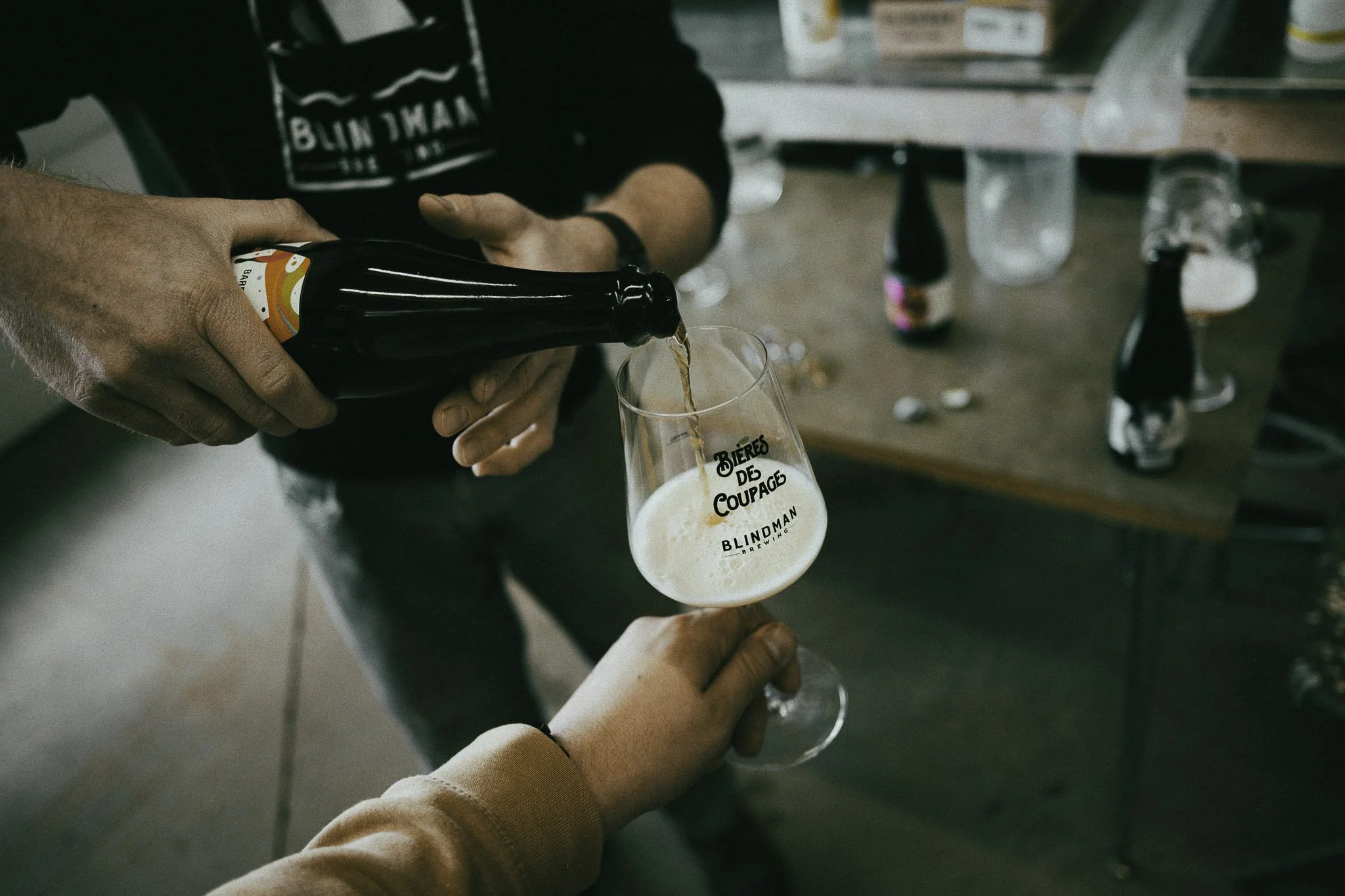
Our relationship with them goes back before Slow Pour was Slow Pour, before we had a bar, before we had strong opinions about glass temperature, cask ale, beer foam, and whether a room could be made to feel better by simply turning the lights down a bit and playing the right record. It goes back to the little warehouse bay version of their taproom in Lacombe, around 2016, when visiting a brewery still felt a bit like finding a secret door in the side of a building. It goes back, even further if we are being honest, to accidentally attending the very first meeting of Edmonton Beer Geeks Anonymous at Wunderbar in 2011, as two little bright-eyed fawns wandering into the tall grass of beer culture without a map, proper boots, or any real understanding of what we were getting ourselves into.
If you do not know the lore, Shane from Blindman was one of the people behind Edmonton Beer Geeks Anonymous, which went on to host cask events like Freeze Your Cask Off and Real Ale Fest. At the time, those events mattered in a way that is hard to explain now without sounding like someone clutching a scrapbook in a cardigan. Alberta beer was not yet the sprawling, strange, lively thing it is now. For many of us, those rooms were where the spell first worked. They were where we learned that beer could be made locally, by neighbours, not only in massive industrial zones where railcar access seemed like a personality trait. Beer could be made in smaller places, by people you could talk to. It could taste like grain, flowers, marmalade, coffee, weather, hay, toast, old wood, orange peel, pepper, smoke, and sometimes, gloriously, like someone had made a sincere attempt at capturing a field trip in liquid form.
Beer could taste like things other than cold.
Amazing stuff.
So yes, Blindman is not just another brewery to us. They are tied up in the early architecture of our obsession. Their fingerprints are probably on more of this place than we realize. Somewhere between those early beer events, the pilgrimages to Lacombe, the cask nights, the conversations, the first sips of beers that felt handmade in the best possible way, a weekend hobby became something else. A curiosity became a vocabulary. A vocabulary became a business. A business became this weird little room we now spend our lives trying to make feel right.
Our first collaboration as Slow Pour was with Blindman. Naturally, we made one of our favourite things: a 3.2% Best Bitter. Beautiful stuff. Modest, balanced, quietly serious, deeply unflashy. The kind of beer that arrives without fireworks and then somehow improves the room. In hindsight, that feels about right. Not because it was dramatic, but because it was not. It was a small beer with a long shadow, which is often how the best things behave.
This spring, we started talking with Blindman about how to go beyond our cask program. We love cask. We love the ritual of it, the softness, the patience, the way it refuses to behave like a regular draught product. It asks for a different kind of attention. But we were also curious about what else might be hiding in their world. Blindman has been around long enough now to have a past, and more importantly, they have been careful enough to keep pieces of it.
This is not always the case. Breweries are busy places. Things move quickly. Tanks fill, kegs leave, labels change, recipes evolve, festivals happen, notes get misplaced, someone means to write something down and then a pump starts making a sound it should not make. Time in a brewery is not exactly linear. Maybe, it's more like a compost pile with forklifts.
But Blindman keeps records. They have dates. They have details. They have cellared kegs. They have oddities and experiments and b-sides. They have little cold pockets where certain beers have been quietly waiting around, not exactly forgotten, not exactly advertised, just existing in the strange half-light between “we should do something with this” and “when would the right moment even be?”
So in April, we went to Lacombe for a field trip.
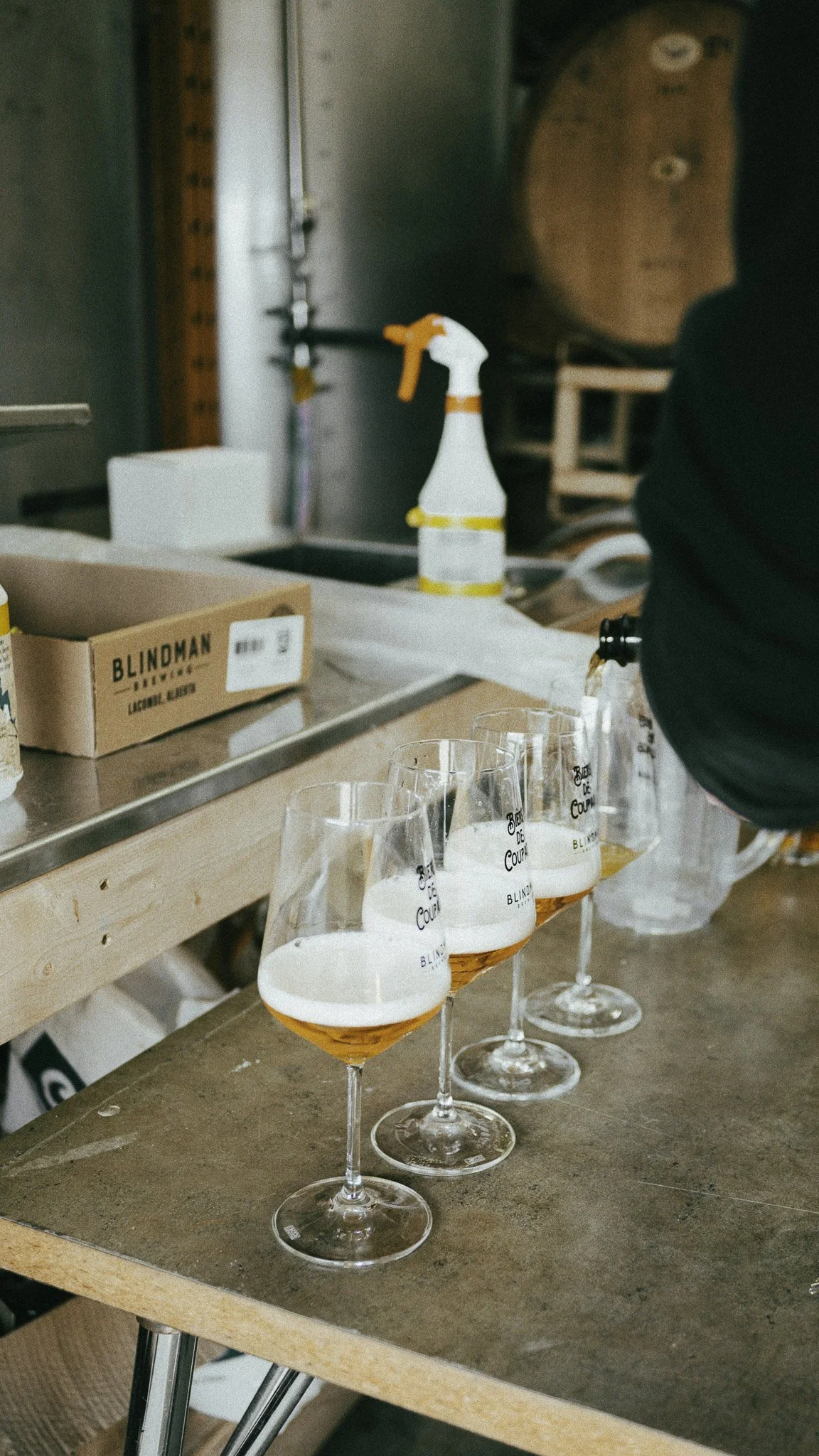
Field trip is the right phrase, I think. Tour feels too official. Meeting feels too dry. Pilgrimage feels too theatrical, though not entirely inaccurate. We went to poke around the little pockets of the brewery, open a few bottles, ask questions, talk about ingredients, beer history, old recipes, Alberta beer, and what has changed since Blindman started making beer and since we started paying attention to it. We walked through the brewery with that particular feeling you get in working spaces that have accumulated years. Not polished history, but useful history. The kind with tape on things. The kind with handwritten notes. The kind where a corner might contain a pump, a pallet, three stories, and some object nobody is allowed to throw away because it might be important.
Somewhere in that conversation, the lightbulb went on.
Blindman had this extensive collection of cellared kegs. Rare things. Strange things. Some experiments. Some b-sides. Some beers that may have never been poured before. Some with paperwork. Some with lore. All of them, in one way or another, evidence of a brewery thinking over time.
The obvious idea was a tap takeover.
And then, almost immediately, we became suspicious of the obvious idea.
A tap takeover can be fun. We have nothing against the form. But it is also a lot of noise at once. Many beers. Many descriptions. Many decisions. A long list of special things all elbowing each other for attention. In the wrong shape, rarity becomes a race. It becomes a little frantic. It becomes something to collect rather than something to consider.
That did not feel like the right way to handle these beers.
Not because they are too precious, exactly. Beer should still be beer. It should be poured, shared, spilled slightly on a coaster, discussed imperfectly, mispronounced with confidence, and enjoyed in real time by real people who may or may not know what Brettanomyces is. We are not trying to place these kegs behind velvet rope and make everyone whisper around them.
But we did feel that each one deserved more space than a lineup.
So we are doing a tap takeover of sorts, just the Slow Pour way.
One keg at a time.
Once a month, we will pour one rare keg from the Blindman cellar. Just one. It will go on tap, get its moment, and be allowed to exist without being crowded by nine other rarities in matching hats. We will tell you what we know. We will share the notes when there are notes. We will probably say something mildly romantic about it, then undercut ourselves with a joke about goblins. We will pour it properly. We will let it breathe in the room. And when it is gone, it may be gone forever.
This is The Blindman Archive.
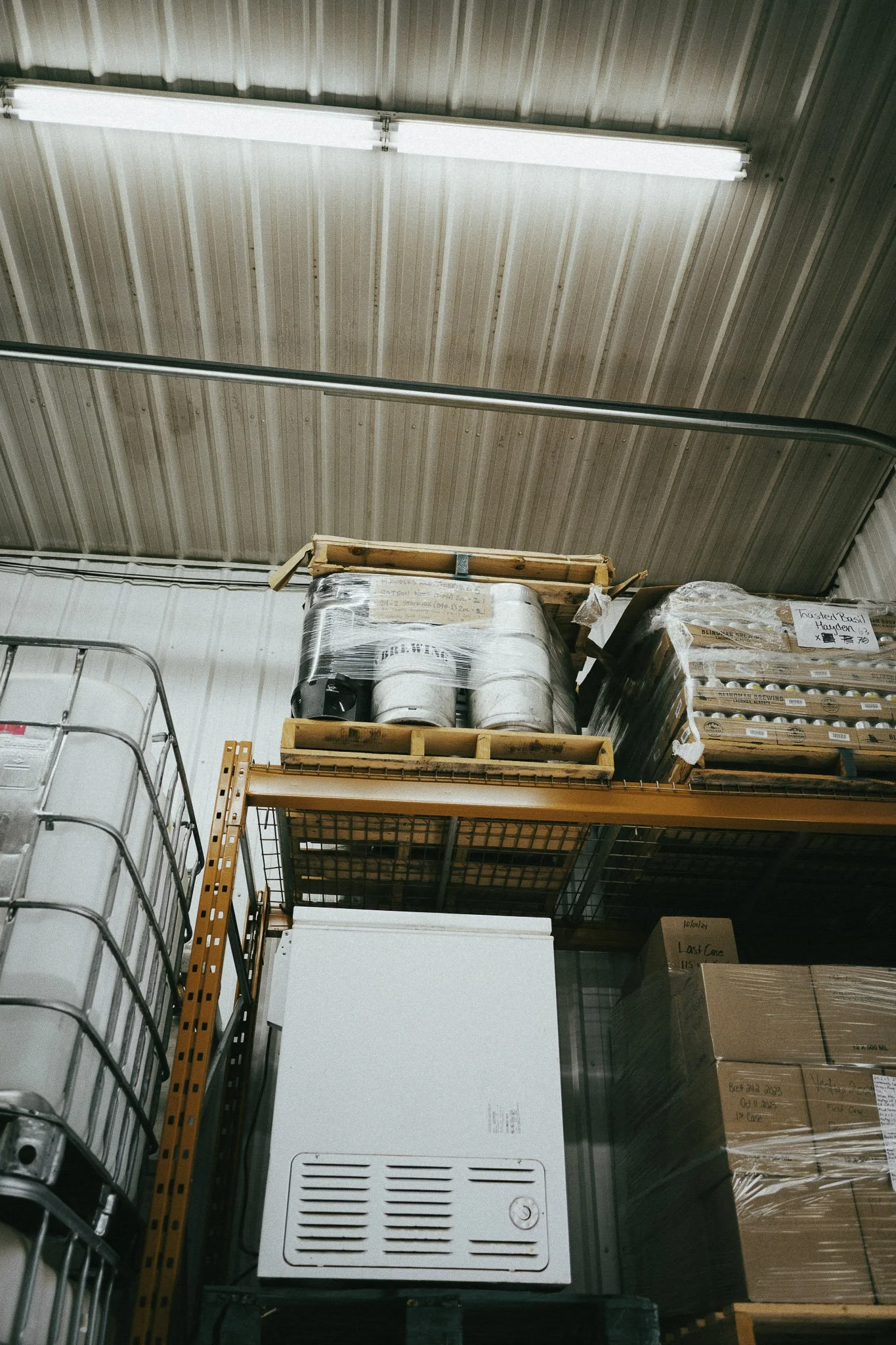
The word “archive” feels right because this is not just about old beer. Old beer can simply be old beer, which is sometimes beautiful and sometimes a lesson. An archive is different. An archive implies care. It implies that someone thought a thing was worth keeping, even if they did not yet know who would come looking for it. It implies a future reader. A future question. A future moment where the box comes off the shelf and someone says, “Oh, right. This.”
A brewery archive is not a museum. It is colder, wetter, less polite, and more likely to include stainless steel, masking tape, and a forklift beeping somewhere in the background. But it has the same basic magic. It holds the side roads. The alternate endings. The versions of a brewery that did not necessarily become the main story, but still mattered. The beers that happened between the obvious beers. The experiments that became clues. The little creatures in the cellar with paperwork.
There is something especially lovely about doing this with Blindman because their history is not abstract to us. It overlaps with ours. Their early work helped teach us what local beer could be. Their events helped build rooms where people learned together. Their brewery became one of those places we returned to, physically and imaginatively, as the Alberta beer scene grew from “wait, people are making beer here?” into a whole ecosystem of breweries, importers, festivals, taprooms, side projects, cask nights, bottle shares, arguments, friendships, and very strong opinions about foam.
We have always believed that serving beer is not passive. It is not just receiving a keg, connecting a coupler, and hoping the beer survives the journey from tank to glass with some dignity intact. There is craft on both sides of the line.
We borrow a phrase from our Czech counterparts often: “The brewer creates the beer, the tapster makes the beer.”
At Slow Pour, we tend to say it this way: our job is to finish what the brewer started.
That idea is central to this series.
Blindman started these beers. They imagined them, brewed them, recorded them, kept them, and let time have a say. Our job is to finish the work with care. To pour each one in a way that honours the keg, the recipe, the age, the carbonation, the glass, the room, the person drinking it, and the tiny, ridiculous miracle that any of this exists at all.
Because beer is usually treated as a now thing. Fresh, cold, current, arriving and disappearing in a constant churn. There is a beauty to that. Beer is alive in the sense that it belongs to time. It changes, fades, brightens, dulls, opens, collapses, surprises, and occasionally develops the personality of an eccentric uncle. But that is why these kegs are interesting. They have been allowed to carry time differently. They are not just products. They are records. Not perfect records, not fixed records, but liquid footnotes from a brewery that has been making decisions for a long while.
And footnotes, as any proper nerd will tell you, are often where the best part is hiding.
A b-side tells you something the single does not. A draft in the margin tells you something the final essay cleaned up. A cellar keg tells you something about the questions a brewery was asking when no one was demanding a clean answer yet.
That is what we want this series to make room for.
Not hype, exactly. Not scarcity as sport. Not a stampede. More like a reading lamp. More like pulling one folder from the box and giving it an evening. More like standing in a brewery in April, opening bottles, talking about what beer used to feel like, what it feels like now, and how lucky we are that some of the strange little things survived long enough to be poured.
Once a month, one rare keg from the Blindman cellar will land on our taps.
Some are experiments.
Some are b-sides.
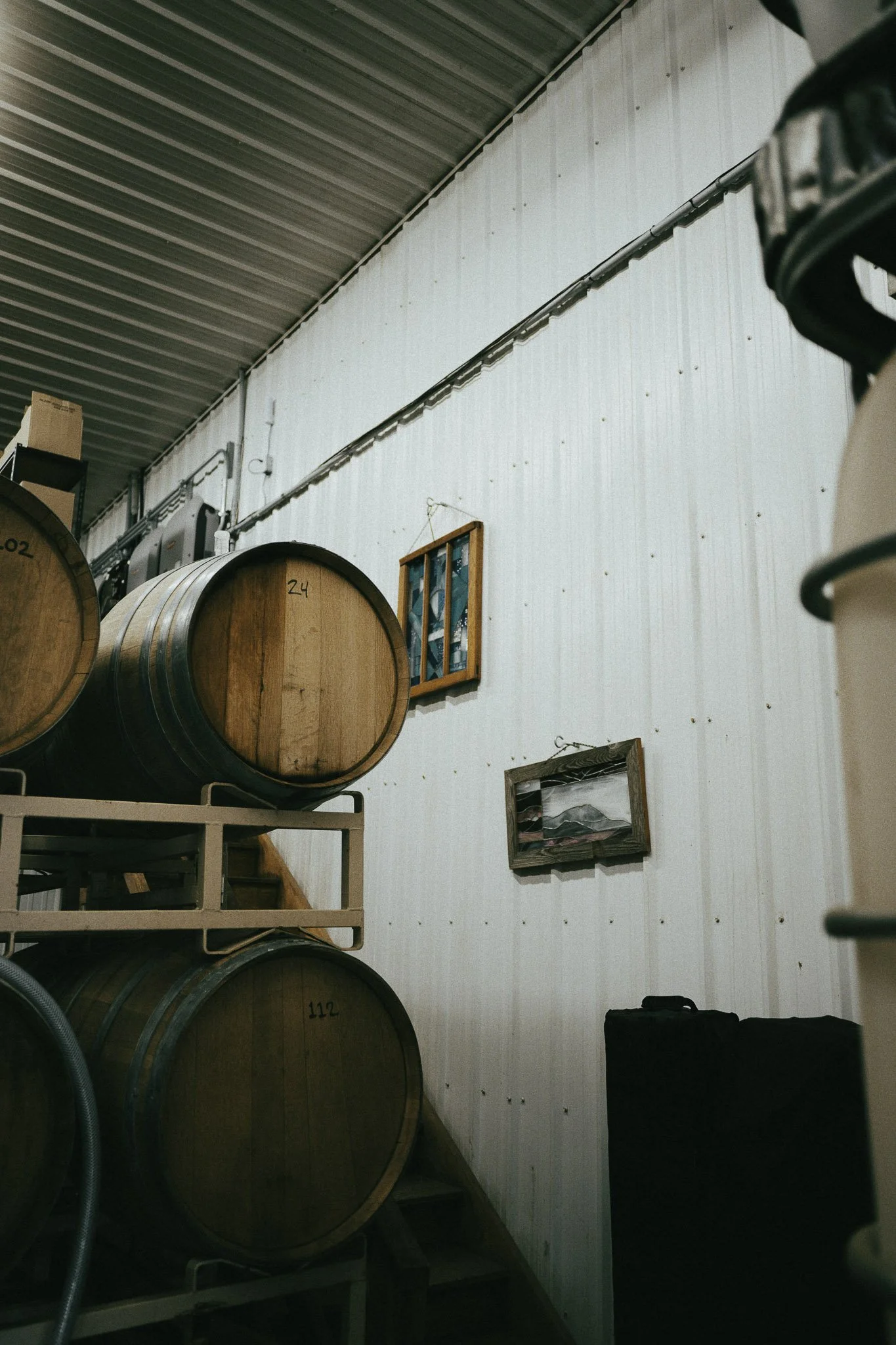
Some may have never been poured before.
All of them have been kept, noted, and quietly waiting around in Lacombe for the right time.
We will give each one its own time on tap. No full takeover. No rush. Just one strange, beautiful thing at a time.
When it is gone, it may be gone for good.