Orval, still moving.
There are beers you understand almost immediately.
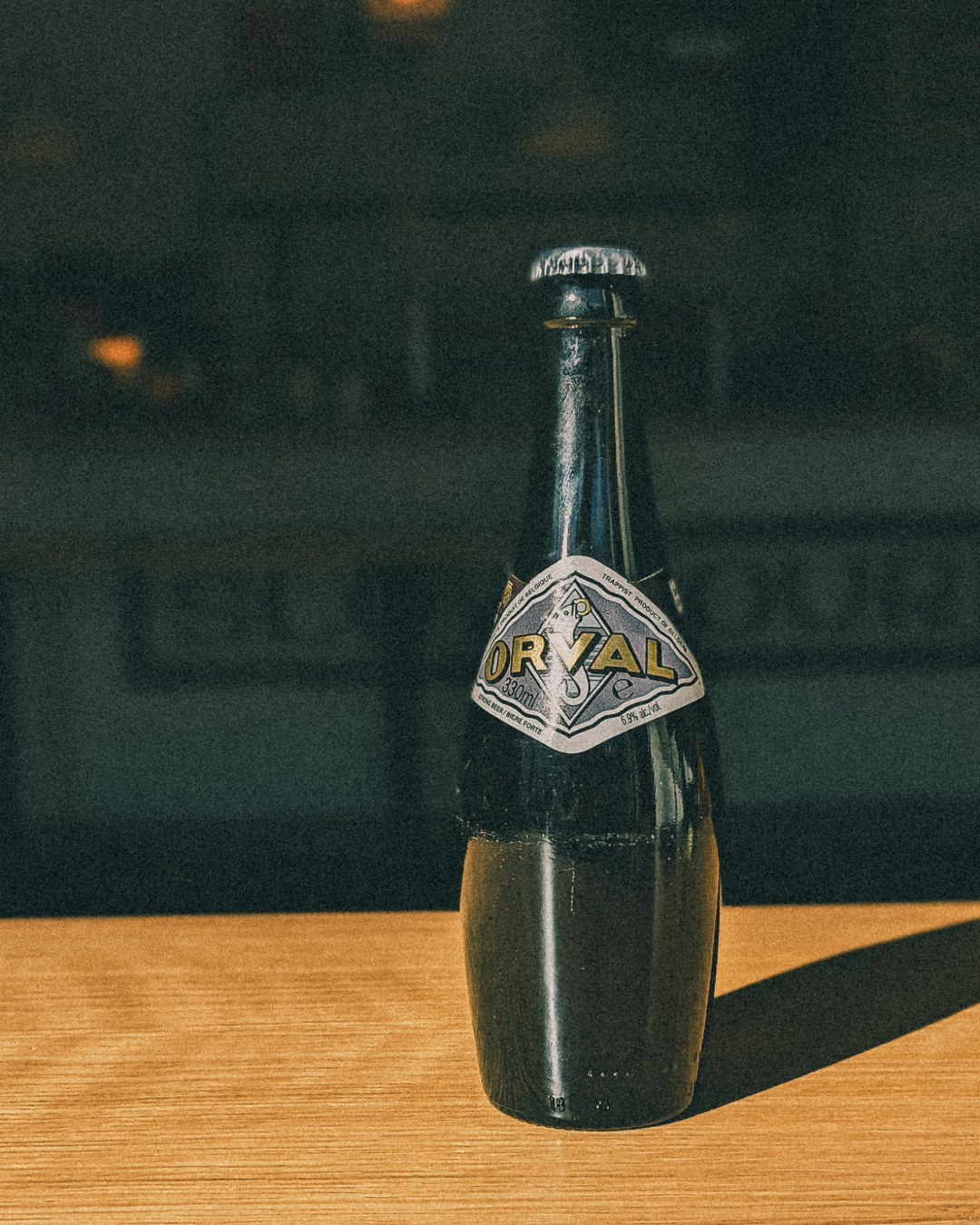
They arrive, make a clean first impression, and tell you exactly what kind of relationship you’re about to have with them. Crisp lager. Juicy pale ale. Dark stout. A quick handshake, a little eye contact, everyone knows where they stand.
And then there is Orval.
Orval does not really do handshakes. It is more like someone quietly taking the seat beside you at the end of the bar and, over the next hour, turning out to be much stranger and much more interesting than their outfit initially suggested. Which, to be fair, is often how the best things in life work. Old churches. Used bookstores. Certain grandmothers. Edmonton strip malls with one extremely specific and excellent thing inside them.
Orval comes from a Trappist monastery in southern Belgium, which already puts it on a different kind of clock. Not the clock of product launches and quarterly targets and carefully timed relevance. Monastery time. Bell time. Stone-wall time. The kind of time that folds in on itself a little. Prayer, work, repetition, silence, sleep, then back again. The same path worn into the ground by the same feet, over and over, until routine stops reading as monotony and starts reading as devotion.
Anthropologists, of course, love this kind of thing. Give them a monastery, a fermented beverage, and a repeated communal practice, and they will black out from happiness. They will use the word ritual at least six times and start saying things like liminal space with a perfectly straight face. They are, annoyingly, sometimes right.
Because beer like this does not come from nowhere. It comes from structure. From worldview. From a way of arranging life that makes room for patience, repetition, and care. Trappist beer is compelling not just because monks make it, but because it is made inside a value system that is suspicious of speed and not especially interested in novelty for novelty’s sake. It belongs to an older order of meaning. One where labour can be sacred, where consistency is a moral practice, where making something well is part of making a life well.
Most Trappist beers feel anchored because of that. They arrive composed. Complete. You open the bottle and there is a sense that everything has been decided. The beer knows exactly what it is.
Orval is the odd one because it does not stay put.
For all its old-world gravity, it has a slightly haunted quality to it. Not spooky exactly, more unsettled in an elegant way. Like an old hotel with really excellent curtains. It leaves the monastery with part of its life still ahead of it. Brettanomyces remains in the bottle and keeps working long after the beer is packaged. Not dramatically, not with fireworks, just steadily, quietly, in the background. The beer changes in storage. It evolves. It keeps moving.
And that is where Orval stops being merely delicious and becomes culturally fascinating.
Most modern food and drink is engineered to remove uncertainty. Same flavour, same profile, same outcome, every time. Consistency is treated like the highest possible good, as though the worst thing a bottle could ever do is surprise you. Which is understandable, I suppose. Surprise is bad for scale. Bad for decks. Bad for those little meetings where someone says consumer trust and everyone nods like they’ve just solved weather.
Orval does something else. It arrives unfinished on purpose.
Not flawed. Not loose. Not careless. Just open.
Fresh, it can feel bright and angular. Herbal, bitter, citrusy, with a kind of firm outline to it. The hops still stand tall. The structure is more visible. There is a clean sharpness to the whole thing, like a newly pressed collar or the first cold day when you finally have to wear the real coat.
Give it time and it starts to soften into itself.
The bitterness eases back. The hops recede a little. Earthier notes rise. Hay. Cellar wood. Leather. A gentle wildness that people usually call funk, which is one of those words that is technically useful and spiritually unfortunate. It makes it sound like the beer has started a side project in a warehouse district. What it actually tastes like is older and quieter than that. Less scene, more place. More like damp stone, old books, dried grass, wool left near a fire. Same bottle, just further along in the story.
It reminds me a bit of those records that do not fully reveal themselves until Side B. Side A gets all the press, naturally. Side A is where everyone puts the obvious charm. Then somewhere later, when you have stopped performing your listening and actually started listening, the thing deepens. Not bigger, not louder, just truer to itself. Orval does that over months. Sometimes years.
Which feels, strangely, very modern.
Not modern in the sleek, chrome, concept-bar sense. Modern in the more existential sense. The sense that identity is not a fixed object. That a thing can remain itself while also changing. That becoming is not a design flaw. That a little instability can be part of the beauty. Orval does not cling to a single perfect version of itself. It lets time leave fingerprints.
There is a founding story, naturally, because Europe has never met a spring, abbey, or fish it did not feel compelled to mythologize. A countess loses her wedding ring in the water. A trout returns it. She declares the place a valley of gold, and the abbey grows from there. It is exactly the kind of story that sounds implausible in a modern context and completely normal once you imagine a medieval person hearing it and going yes, obviously, God through trout, next question.
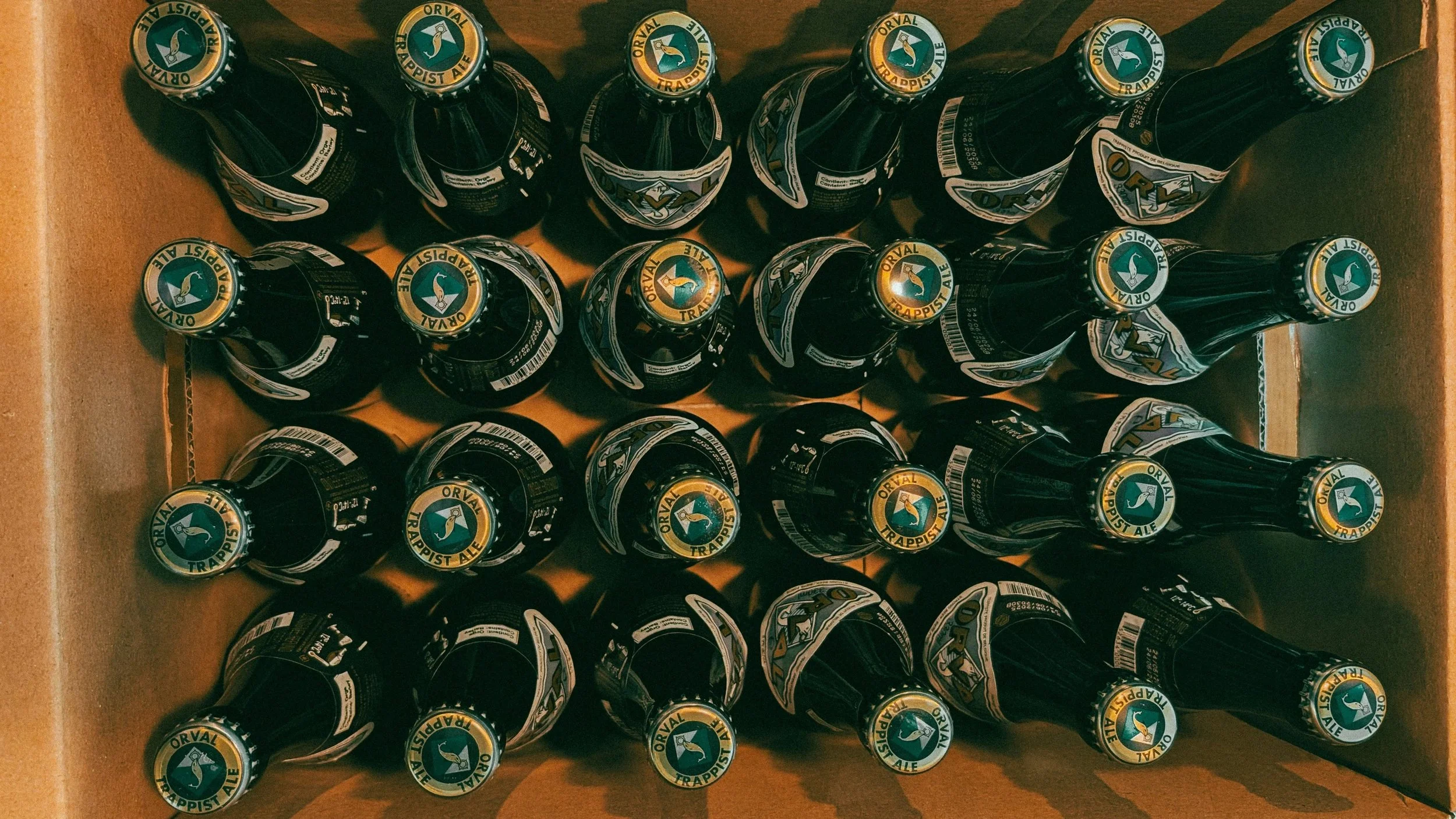
You still see the trout and ring on the bottle. A small little emblem that does a lot of work. It says this place runs on more than process. More than recipe. There is chance here, and faith, and folklore, and the old human tendency to explain meaningful places with stories rather than diagrams. Which, frankly, I respect. We have perhaps overcorrected toward diagrams.
Beer has always lived in that overlap between the practical and the symbolic. It is grain and yeast and water, yes, but it is also labour, climate, class, trade, religion, social life, architecture, agriculture, empire, migration, all of it. It tells you what people valued, what they had access to, what they knew how to preserve, and what sort of world they were trying to make bearable. Monastic brewing was never just a hobby with better glassware. It was nourishment. Hospitality. Economy. Discipline. A social technology, if you want to get academic about it, which I occasionally do against my own will.
Orval still carries some of that weight. Not heavily. It is too graceful for that. But you can feel it. It tastes like context. It tastes like a place where time works differently.
And maybe that is part of why it feels so right to us.
At Slow Pour, we have always had a soft spot for things that resist flattening. Things that take a little time. Things that do not rush to explain themselves, or worse, market themselves to death. Orval belongs in that family. It is not loud about what makes it special. It does not arrive with jazz hands. It just keeps being itself, and if you pay attention, that self turns out to be more layered than you first thought.
Edmonton, in its own way, understands that kind of slow transformation. Ours is not a city of graceful transitions. Our seasons do not drift so much as stall, lurch, and then reverse out of spite. Late March here is a particularly good example of unstable identity. Snowbanks clinging on with the energy of a guest who said they were leaving twenty minutes ago. Sidewalks half thawed, half ice. Everyone emotionally in spring, physically still in winter. It is a very Orval time of year, honestly.
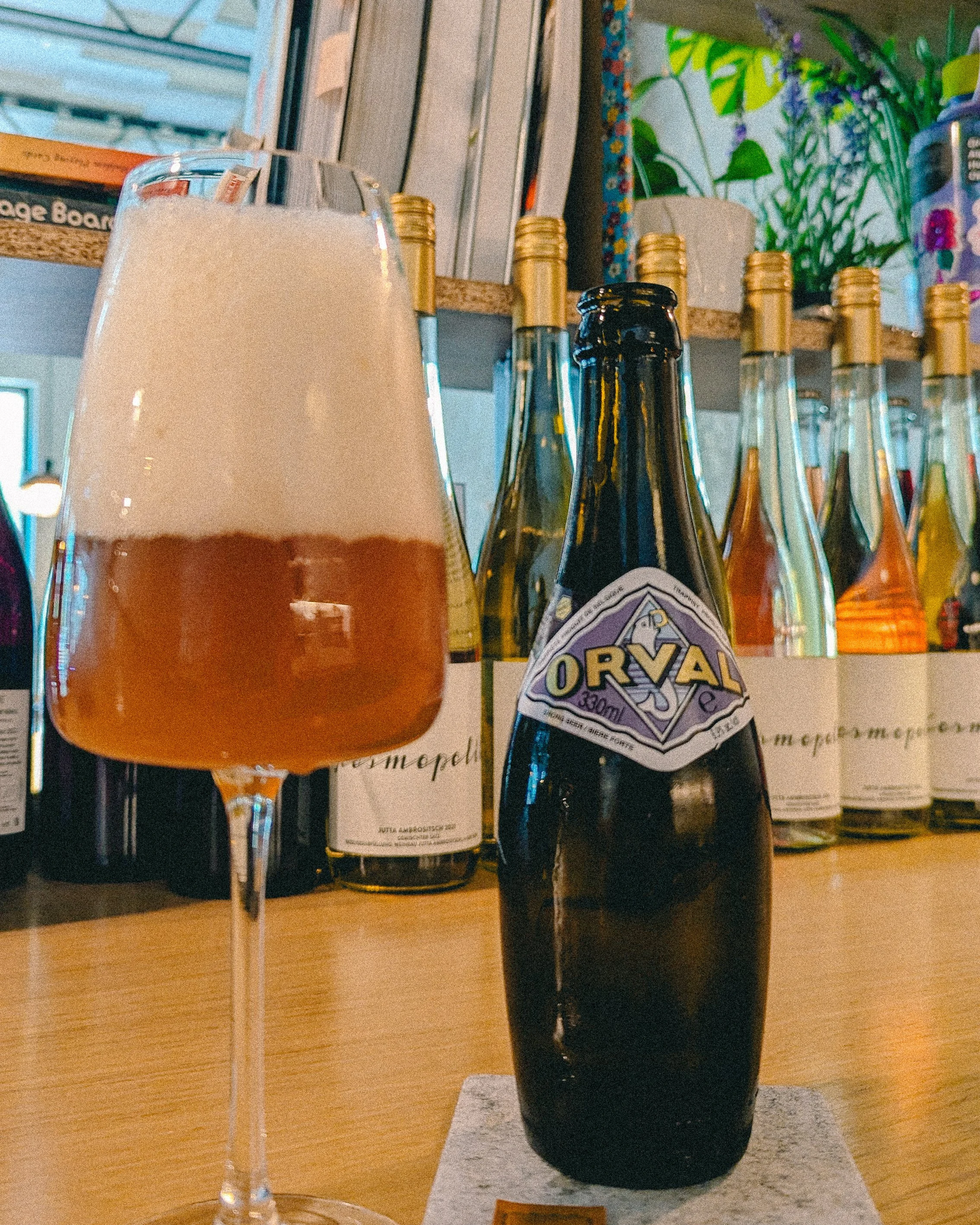
You can open one now, while the city is still in that awkward in-between state, and the beer feels right at home. Tense, but softening. Structured, but loosening at the edges. Open another in summer and it shows up differently. Not in some dramatic before-and-after way, just enough to remind you that time happened. That you happened too.
That is the pleasure of it.
Not spectacle. Not revelation. Just Drift.
A beer that rewards patience without demanding a performance of patience from you. A beer that can be cellared, analyzed, discussed, compared, probably over-explained by someone in a nice knit sweater, and still remain deeply drinkable. That may be the most charming thing about Orval. For all its layers, all its monastic lineage, all its weird little beautiful instability, it is not precious. It is not standing at the bar waiting for applause. It is just beer. Exceptionally alive beer, but beer all the same.
For Orval Day, we’ll be opening just a few bottles, a bit of conversation, and a beer that is still becoming itself. Not as a formal lesson, really. Nothing too tidy. Just a chance to sit with the beer.
Or just come drink one and ignore all the anthropology.
That is also, historically speaking, a valid use of beer.
-sp