The Snug
If you visit one of the older pubs in Ireland, you may notice a small, partitioned room off to the side. Frosted glass, a narrow bench - sometimes its own street door. And, almost always, a hatch in the wall.
Now, this is a proppa snug.
The Irish pub, as we imagine it now, was shaped heavily in the early 19th century. The 1830 Beerhouse Act expanded licensing across Britain and Ireland, multiplying places where drink could be legally sold. Later came the 1872 Licensing Act, then the 1902 Intoxicating Liquor Act. What a rollercoaster. Hours were tightened. Behaviour monitored. Respectability, increasingly legislated.
Pubs responded the way they have for thousands of years. They adapt.
Some became “spirit grocers,” selling tea, sugar, and hardware alongside whiskey, particularly during periods of temperance pressure. Many were rebuilt in the late Victorian era with carved mahogany bars, etched glass panels, and neatly partitioned interiors. Cities were swelling but licenses were thinning, following 1872. Surviving pubs often invested in renovation to signal legitimacy and stability. Reformers believed better design would produce better behaviour. Moral architecture, set in mahogany and brass.
The thinking was simple: if you made the room grand, perhaps people would behave grandly inside it. The Victorian pub also wasn’t one room but a small social map: the public bar for labourers and quick pints, the saloon or lounge for quieter company and slightly higher prices.
Respectability, of course, was not evenly distributed. It would be, as Father Hackett may say, an ecumenical matter. Tap rooms, smoking rooms, and tucked among them all, the snug. Each space carried its own expectations about who belonged where.
For much of the Victorian era and well into the early 20th century, women were discouraged from drinking in the “main” public bar. To stand openly at the counter was to invite commentary and side-eyes at best, scandal at worst. Imagine the horror - a woman! Drinking! Alcohol! In public. Woof. But the snug offered a workaround. A private compartment where a woman (or anyone conducting business that preferred fewer witnesses) could order a stout or whiskey without performing it for the room. You can regulate the pint. You can partition the room. Taking it away from people entirely has historically proven… difficult.
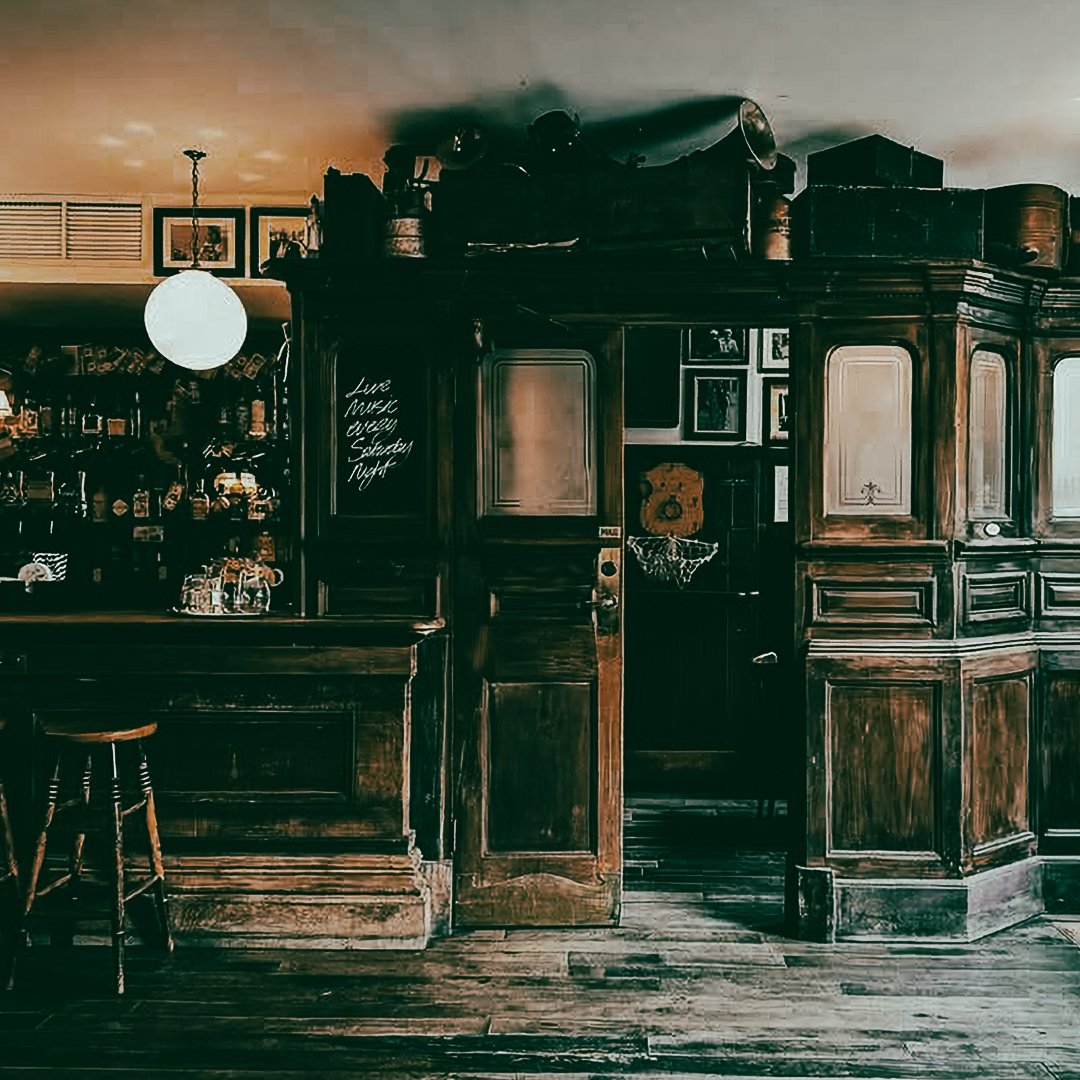
You would knock. The hatch would slide open. A drink would appear. Money would pass back through. A small choreography of discretion.
The hatch itself was deliberate. Frosted glass kept the drinker private, but the publican could still see the silhouette of a hand reaching forward for the glass. It’s not hard to imagine what passed most often through those little openings. A stout travels well in silence. It just goes to show you can regulate the pint. You can even partition the room. You can even turn it into “Moe’s Pet Shop”. But taking it away from people entirely has historically proven… difficult.
Clergy used them. Policemen. Couples. And it wasn’t uniquely Irish.
Here in Edmonton, there were still recent remnants: the Old Strathcona Hotel once operated with two doors, one marked for women. Prairie beer parlours, shaped by early 20th-century Alberta liquor laws, often separated “ladies and escorts” from the main room entirely. Same pint. Different thresholds for the Empire. Even after Irish independence, regulation lingered. The 1927 Intoxicating Liquor Act restricted Sunday sales and further narrowed drinking hours. The snug persisted. Part modesty, part habit, part moral compromise, part architectural stalwart.
The public bar was communal, loud, democratic in theory. The snug was contained. Designed for those who did not fit comfortably into the room’s unwritten rules. By the mid-20th century, as women claimed their place openly at the bar in Ireland and across Canada, many snugs and side doors lost their original function. Some were removed. Others remained, softened into nostalgia. A curiosity for tourists. A cozy photo opportunity. History with a cushion. A need for those seeking out the quintessential Irish-pub experience.
Today the frosted glass feels charming. The separate entrance feels faintly absurd.
The stout, thankfully, survived the partition.
We don’t have a hatch in the wall. No sidedoors or secret knocks.
If you’d like a pint, you’ll have to risk being seen with it.